Schengen Visa Application 2026

How to Get a Schengen Visa

Europe, with its historic cities, cultural richness, and well-developed transportation network, is one of the most visited regions in the world. Every year, millions of people travel to European countries for tourism, business trips, education programs, trade fairs, and family visits. Most of these countries fall under a shared visa system known as the Schengen visa.

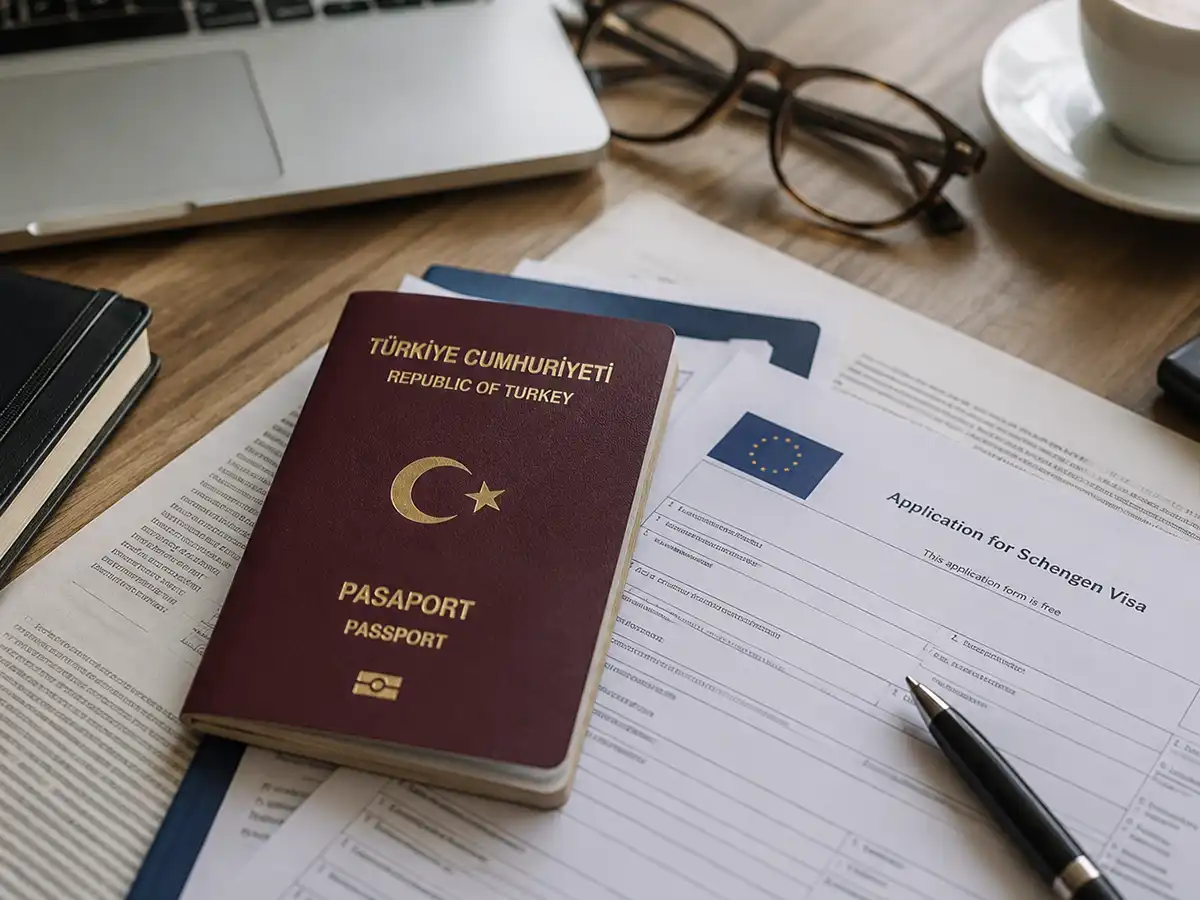
TayaTravel Professional Schengen Visa Consultancy Application Form
What Is a Schengen Visa?

What Is a Schengen Visa?

Europe, with its historic cities, cultural richness, and well-developed transportation network, is one of the most visited regions in the world. Every year, millions of people travel to European countries for tourism, business trips, education programs, trade fairs, and family visits. Most of these countries fall under a shared visa system known as the Schengen visa.

The Schengen visa is a short-term visa that grants freedom of movement among Schengen Area member states for a specific period. Holders of this visa can travel within the Schengen Area without being subject to passport control, in accordance with the visa's conditions.

The vast majority of Turkish citizens must obtain a Schengen visa for their travels to countries within the Schengen Area. Whether the purpose of travel is tourism, a business meeting, a family visit, or short-term study, an application must be made under the appropriate visa category.

At TayaTravel, our Schengen visa consultancy provides professional support at every stage — from applying to the correct country and determining the right visa category, to preparing documents and planning the appointment process.

Who Needs a Schengen Visa?

Who Needs a Schengen Visa?

  • A Schengen visa is commonly sought by people traveling for the following purposes:
  • Those wishing to take a tourist trip
  • People visiting family or friends
  • Business people attending commercial meetings
  • Visitors to trade fairs, congresses, and seminars
  • Students attending short-term education programs
  • Participants in Erasmus and exchange programs
  • People attending cultural and artistic events
  • People traveling for short-term medical treatment
  • Passengers transiting through the Schengen Area

Choosing the visa type suited to your purpose of travel is one of the most important steps of the application; applying under the wrong category can lead to a longer process or an unfavorable outcome.

What Is the Schengen Area, and Which Countries Does It Cover?

What Is the Schengen Area, and Which Countries Does It Cover?

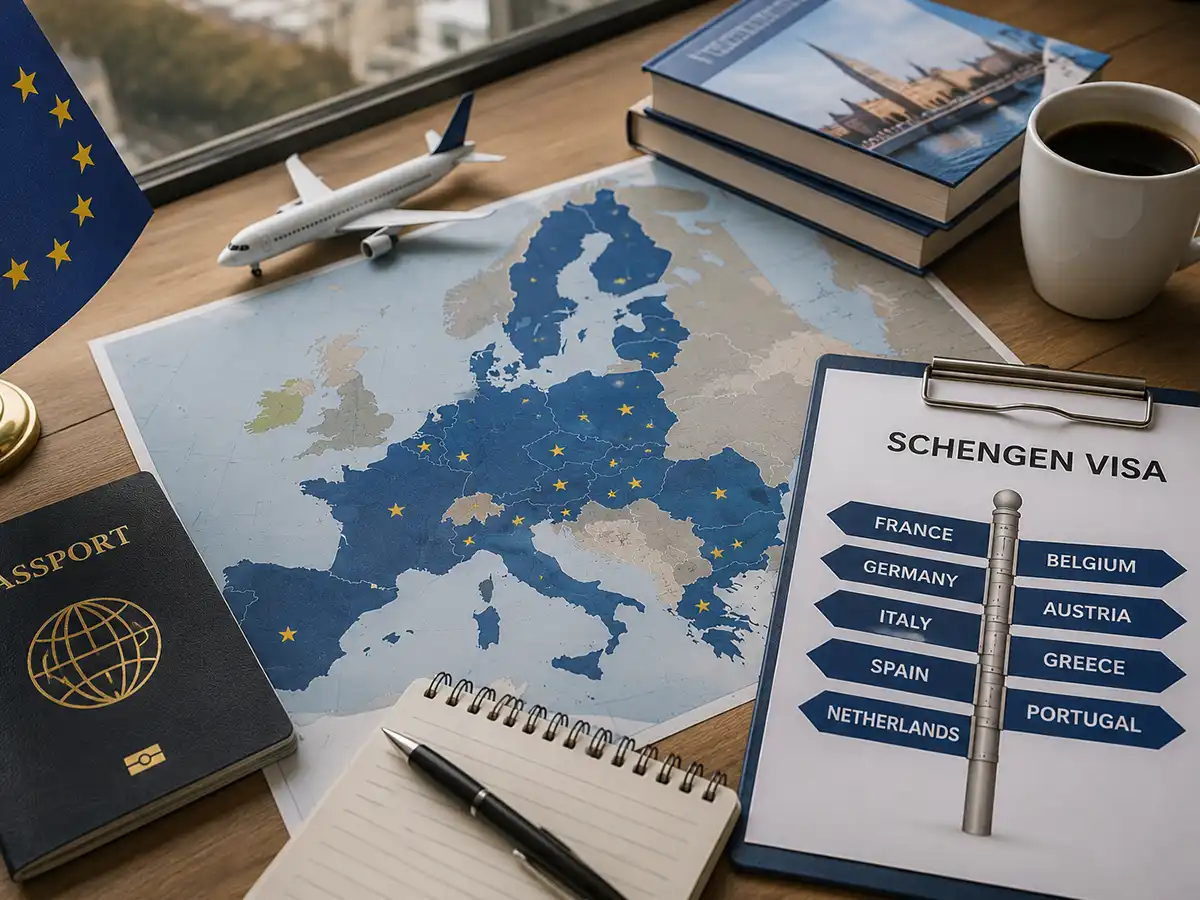
The Schengen Area is a free-movement zone made up of European countries that have abolished internal border checks and apply a common visa policy among themselves. Its purpose is to facilitate free movement among member states, establish a shared visa system, manage external border security under common rules, and facilitate travel and trade.

The main Schengen countries are: Germany, France, the Netherlands, Belgium, Luxembourg, Italy, Spain, Portugal, Austria, Greece, Poland, Czechia, Hungary, Slovakia, Slovenia, Croatia, Denmark, Sweden, Finland, Estonia, Latvia, Lithuania, Malta, Iceland, Norway, Switzerland, and Liechtenstein. Since the scope of the Schengen Area can be updated from time to time, it's recommended to check the current list of member countries before traveling.

The Schengen Area and the European Union are not the same thing: not every EU country is part of the Schengen Area, and some countries within the Schengen Area are not EU members. For this reason, when planning your trip, you should always check whether your destination is subject to Schengen rules — for example, the U.K. and Ireland are not part of the Schengen Area, and entry to these countries is not possible with a Schengen visa.

Free Movement with a Schengen Visa and Choosing the Right Country

Free Movement with a Schengen Visa and Choosing the Right Country

One of the main advantages of a Schengen visa is that, under the right conditions, it allows travel to more than one Schengen country with a single visa. However, this doesn't mean you can apply to whichever country you like — the country you should apply to is determined by criteria such as your main destination and the length of your trip. It cannot be said that getting a Schengen visa is easy or difficult; every application is evaluated individually based on the applicant's purpose of travel, financial situation, profession, travel history, and submitted documents. No consultancy firm or individual can guarantee approval; the final decision is made by the consulate or authorized visa unit of the relevant country.

The Main Destination Rule

The basic rule in Schengen applications is that you should apply to the country where you plan to spend the most time on your trip. This is called the main destination Rule. For example, if you plan to spend 6 days in Germany, 3 days in the Netherlands, and 2 days in Belgium, you should apply through Germany, since that's the main purpose and longest stay of your trip. This rule is one of the most important evaluation criteria in Schengen applications.

The First Entry Rule

Sometimes a travel plan involves an equal number of days in each country — for example, 4 days each in France, Italy, and Spain. In this case, the country of first entry is used as the basis: if you'll enter France first, it's appropriate to apply through the French Consulate. The first entry rule only applies when the length of stay is equal across countries.

What Happens If You Apply to the Wrong Country?

A mismatch between your travel plan and the country you applied to can negatively affect how your application is evaluated. For example, if you apply through Italy but plan to spend most of your trip in Germany, the relevant consulate may determine that your application does not fall within its jurisdiction. You may come across comments online claiming that certain countries "issue Schengen visas more easily"; however, the criterion that matters is which country your travel plan actually corresponds to — applying to a different country simply because you think it will be easier is not a sound approach.

Applying for a Single Country or a Multi-Country Trip

If your trip covers only one Schengen country, the application is made directly through that country's consulate or its authorized application center. For a European tour covering multiple countries, the country to apply to is determined based on length of stay, as shown below:

Example Travel PlanCountry to Apply To
Germany (5 days), Netherlands (3 days), Belgium (2 days)Germany (longest stay — main destination)
France (4 days), Italy (4 days), Spain (4 days)France (country of first entry — equal length of stay)

After the visa is issued, reasonable changes to the travel plan can occur due to circumstances such as flight cancellations or required connections; what matters is that the plan submitted at the time of application was genuine, and that later changes are based on reasonable grounds. Hotel reservations, flight itineraries, and invitation letters supporting your travel plan are important elements showing that the application was made to the correct country.

Types of Schengen Visas: Which One Is Right for You?

Types of Schengen Visas: Which One Is Right for You?

While all short-term European visas are commonly referred to as "Schengen visas," there are actually different visa categories and procedures depending on the purpose of travel. Schengen visas generally fall into two main groups: the C-Type Schengen visa for short stays, and the D-Type National Visa, evaluated under the national legislation of the relevant country, for long-term education, work, family reunification, or residence.

1. Tourist, Business, and Social Visits (C-Type)

This is the most common application category, used for vacations, business trips, or family/friend visits.

Tourist Schengen Visa: Used for vacations, cultural trips, city tours, European tours, and individual travel. Your travel plan, accommodation details, transportation plan, and financial situation are important elements of this application.

Business Schengen Visa: Used for business meetings, company negotiations, trade fairs, congresses, seminars, and visits to business partners. An invitation letter and company documents can play an important role.

Family and Friend Visit Visa: For those wishing to visit family members or friends living in the Schengen Area. An invitation letter, the host's residence details, and documents showing the relationship may be requested; requirements can vary by consulate.

2. Education and Exchange Programs

Schengen Student Visa: Used for short-term education programs, summer schools, or language courses. Requires a school admission letter, program details, proof of financial means, and an accommodation plan. Long-term education may require the relevant country's D-Type national visa.

Erasmus and Exchange Program Visas: For students participating in Erasmus and other exchange programs between European universities; requires an acceptance letter, university correspondence, grant/scholarship documents, and financial documents.

3. Trade Fairs, Health, Cultural, and Sports Events

Trade Fair and Congress Visa: Applications for international trade fairs, congresses, trade organizations, and professional events are generally evaluated under the Business Schengen Visa category. Participation certificates and invitation letters support the application.

Health Visa: For people traveling for short-term medical treatment; requires hospital correspondence, a treatment plan, appointment documents, and proof of financial means.

Cultural and Sports Event Visas: For artists, athletes, and people attending concerts, festivals, sporting competitions, or scientific events.

Transit Visa: May be required in some cases for passengers traveling through Schengen countries to another destination; the requirement depends on nationality, the transit country, and the travel route.

4. Long-Term Stays (D-Type National Visa)

The D-Type Visa is issued to people who will stay in one of the Schengen countries for reasons such as long-term education, employment, family reunification, or residence, and is evaluated directly under that country's national legislation. University education, long-term employment, family reunification, and residence permits are among the situations that call for a D-Type National Visa.

Visa Types by Number of Entries

Single-Entry Visa: Grants the right to enter the Schengen Area only once. Once you leave the Area, re-entry may not be possible even if the visa is still valid.

Double-Entry Visa: Allows entry into the Schengen Area twice within the specified validity period; suitable for those planning to leave the Schengen Area temporarily and return during their trip.

Multiple-Entry Visa: Allows multiple entries during the visa's validity period; frequently preferred by business people who travel often and employees of international companies. Granting multiple-entry rights is entirely at the discretion of the relevant consulate.

Quick Reference: Visa Type by Purpose of Travel

Purpose of TravelSuitable Visa Type
Tourist tripTourist Schengen Visa
Business meetingBusiness Schengen Visa
Family visitFamily Visit Visa
Friend visitVisit Visa
Short-term educationStudent Schengen visa
Erasmus programEducation / Erasmus Visa
Trade fair or congressBusiness Schengen Visa
Travel for medical treatmentHealth Visa
Sports or cultural eventCultural / Sports Visa
Transit passageTransit Visa
Long-term educationD-Type National Visa
EmploymentD-Type National Visa
Family reunificationD-Type National Visa

Choosing the correct visa type is one of the most important steps in the application process. At TayaTravel, we assess your travel plan to help ensure your application is filed under the correct visa category.

How to Apply for a Schengen Visa (Step-by-Step Guide)

How to Apply for a Schengen Visa (Step-by-Step Guide)

While the application procedure of every Schengen country largely follows common rules, there can be small differences in document requirements, application centers, and processing steps. In general, a Schengen visa application consists of the following steps:

Determining your purpose of travel

Selecting the correct country to apply to

Completing the application form

Preparing the required documents

Scheduling an appointment

Submitting the documents

Fingerprinting procedures (if required)

Having the application evaluated

Receiving your passport back

Application Form and Document Submission

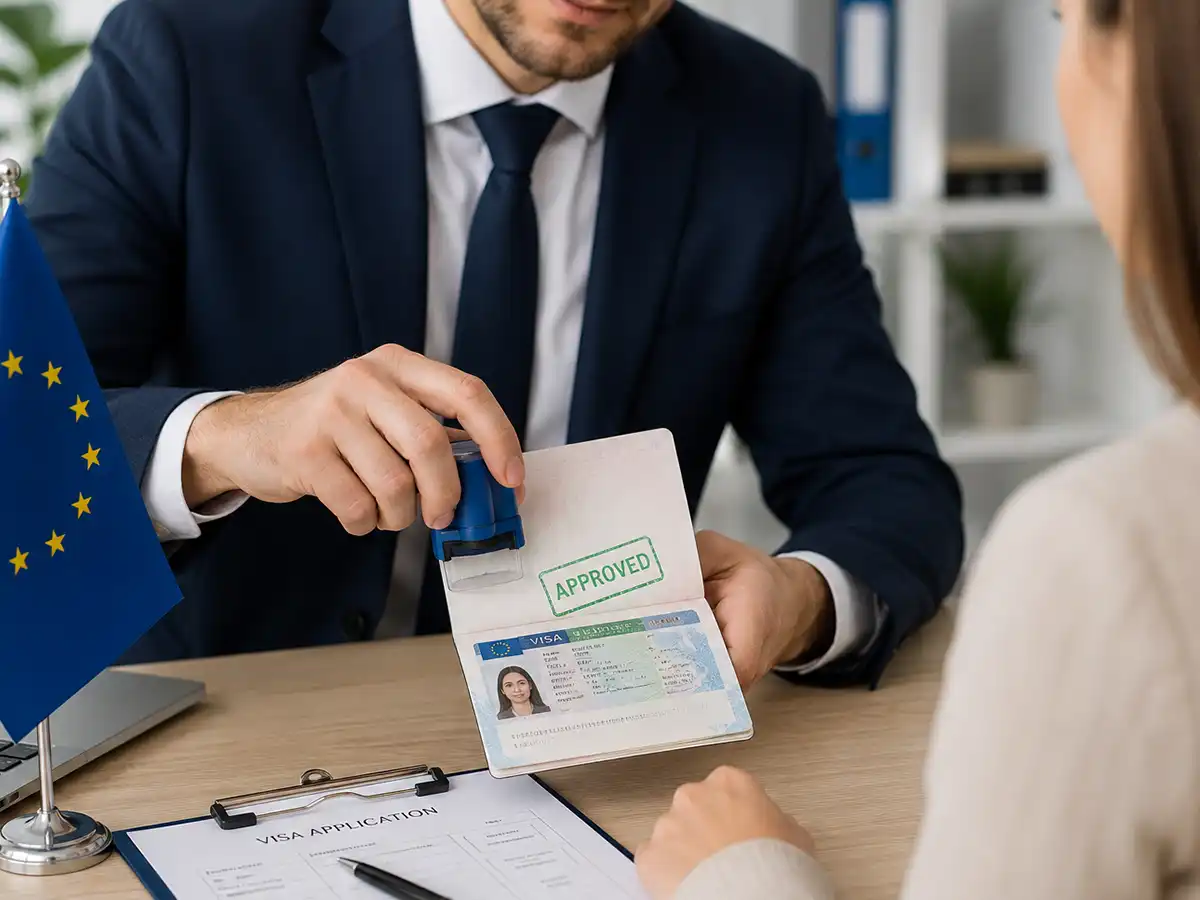
The application form includes identity, passport, contact, occupation, purpose of travel, accommodation, travel dates, financial information, and previous visas; it's important that this information fully matches your other documents. On your appointment day, you submit your documents in full; they are checked, the form is reviewed, fees are collected, and fingerprints may be taken if required. Missing documents can extend the evaluation process.

Appointment availability can become tighter during the summer season, public holidays, the start of school terms, and religious holidays. For this reason, it's recommended to begin your application preparations as soon as your travel plan is finalized.

Fingerprinting (VIS) Procedures

Schengen countries use a shared biometric data system called the Visa Information System (VIS). Through this system, previous Schengen applications, fingerprint records, and application history can be securely evaluated by the relevant authorities. fingerprints and biometric data may be collected from applicants where applicable; those who already have a valid biometric record may not need to provide fingerprints again in some cases, though this depends on the practices of the country you're applying to. The fingerprinting procedure is quick, painless, and carried out digitally.

Evaluation of the Application and Return of the Passport

After the application is submitted, it is evaluated based on criteria such as the accuracy of the documents, purpose of travel, financial situation, intent to return, and consistency of the documents; additional documents may be requested if deemed necessary. Once a decision is reached, the passport is delivered to the applicant through the chosen delivery method. Upon receiving your passport, it's recommended to check your name, passport number, visa start/end date, length of stay, and number of entries. Processing time can vary depending on the country applied to, seasonal demand, public holidays, and requests for additional documents, so it's important to apply well ahead of your planned travel date.

Required Documents for a Schengen Visa

Required Documents for a Schengen Visa

Schengen countries apply common visa rules, but the list of documents requested and the evaluation criteria can differ from country to country. The main purpose of the documents you prepare is to clearly answer the following questions for the consular officer, supported by evidence:

What is your purpose of travel?

How will you finance your trip?

Where and for how long will you stay in the Schengen Area?

Do you have strong ties to Turkey?

Will you return to Turkey after your trip?

Core Documents

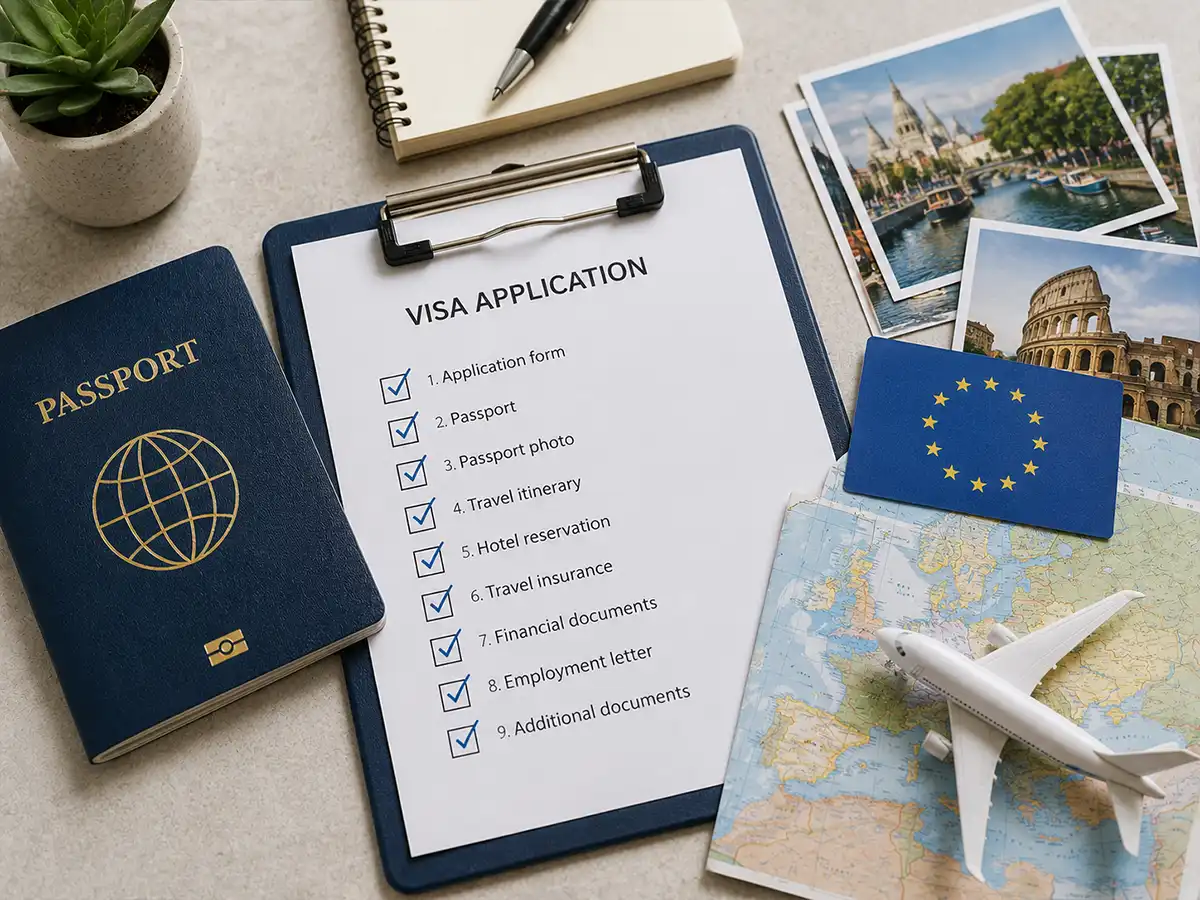
A valid passport (not worn out, legible, with sufficient blank pages, and valid for a sufficient period after your return) and any old passports you may have

The Schengen visa application form, completed in full and consistent with your other documents

A biometric photo (current, meeting technical standards, with a light-colored background)

A travel health insurance policy

Transportation and accommodation reservations, a tour itinerary, and an invitation letter if applicable

Documents Showing Financial Status

Bank statements, salary slips, tax records, rental income, pension statements, and company income documents support the applicant's financial ability to cover travel expenses. It's important that these documents are current, show regular activity, and reflect a genuine financial situation; presenting natural account activity is far more effective than unusual transactions created only for visa purposes.

Additional Documents by Profession

Employees registered with social security: employer assignment/leave letter, social security registration document, social security records, recent salary slips

Business owners: tax certificate, activity certificate, trade registry gazette, signature circular, company and personal bank accounts

Freelancers / self-employed: service contracts, invoices, tax records, income documents, bank statements

Students: student certificate, and if needed, sponsor and income documents, consent letter

Retirees: retirement certificate, pension statements, bank statements, and property deeds if applicable

Homemakers / those without income: sponsor letter, sponsor's income and bank documents, proof of relationship

Farmers: agricultural registry records, land deeds, product sales documents, bank statements

Doctors, lawyers, and other licensed professionals: chamber registration, license documents, tax certificate, income and bank documents

Sponsored Applications

If your travel costs will be covered by someone else, documents showing the sponsor's financial situation should also be added to the file: a sponsor letter, income documents, bank statements, ID, and proof of the relationship. Having a sponsor is not, by itself, a positive or negative factor in the evaluation.

At TayaTravel, we prepare a document checklist suited to your purpose of travel, profession, and personal situation, supporting a complete application file through personalized planning rather than a one-size-fits-all list.

Travel Health Insurance for a Schengen Visa

Travel Health Insurance for a Schengen Visa

travel health insurance is one of the core, mandatory documents for Schengen visa applications. Applications without an insurance policy, or with one that doesn't meet the requirements, may be treated as having incomplete documentation during evaluation. This document matters not only for the visa application, but also as genuine coverage against unexpected medical issues abroad.

Coverage can vary by insurance provider but generally includes emergency medical services, hospital treatment, doctor consultations, emergency medical interventions, ambulance services, emergency medication costs, medical evacuation, and repatriation arrangements where necessary.

The policy needs to cover the entire duration of your planned trip, be valid in all the Schengen countries you'll visit, and meet the minimum coverage requirements set by the relevant consulate. The policy must fully match the information in your application form and other documents, such as your passport details and travel dates.

Submitting travel health insurance alone does not guarantee visa approval; the application file is evaluated as a whole, together with your financial situation, purpose of travel, accuracy of documents, and ties to Turkey. At TayaTravel, we advise on the right insurance coverage for your travel plan, helping ensure your file is complete in this respect as well.

Schengen Visa Interviews and Biometric Procedures

Schengen Visa Interviews and Biometric Procedures

Not every Schengen visa applicant goes through a standard consular interview. Most applications are accepted and documents submitted through the visa application centers authorized by the relevant country. However, in some cases the consulate may invite an applicant for an interview — for instance, to request additional information, verify documents, or review the application in more detail.

Topics That May Come Up If You're Called for an Interview

You may be asked about your purpose of travel, which countries you'll visit, how long your trip will last, where you'll be staying, who will cover your travel costs, what you do for work, whether you've held a Schengen visa before, and your plan to return to Turkey. It's important to give short, accurate answers, avoid providing false information, and ensure your documents match your verbal statements.

The VIS System and Fingerprint Exemptions

VIS (Visa Information System) is a shared information system used among Schengen countries, designed to ensure the application process is carried out securely. Depending on the validity of previously collected biometric data, the country applied to, and current Schengen practices, some applicants may be exempt from providing fingerprints again; the final assessment is made by the relevant consulate or authorized application center.

Common Mistakes in Interviews and Applications

Common Mistakes in Interviews and Applications

Not remembering the information provided on the application form

Preparing an unrealistic travel plan

Contradictions between documents and the application form

Submitting incomplete documents

Failing to clearly explain the purpose of travel

Presenting outdated documents

Applying to the wrong country

Why Are Schengen Visas Refused? (Reasons, Appeals, and Reapplying)

Why Are Schengen Visas Refused? (Reasons, Appeals, and Reapplying)

A Schengen visa refusal is a decision by the relevant country's consulate or authorized body that the application does not meet the visa requirements, based on the information and documents submitted. Receiving a refusal does not mean you can never obtain a Schengen visa in the future; what matters is correctly assessing the reason for refusal and preparing your next application accordingly.

Why Are Schengen Visas Refused?

Incomplete or insufficient documents submitted

Purpose of travel not sufficiently explained

Financial situation not adequately documented to support the trip

Inconsistencies in accommodation or transportation details

Incomplete or contradictory information on the application form

Insufficient evidence of strong ties to Turkey

Submission of fraudulent or unverifiable documents

Previous visa violations, or a travel plan deemed unrealistic

What to Do After a Refusal, and Reapplying

What to Do After a Refusal, and Reapplying

If your application is refused, the first step is to carefully review the reason for refusal provided by the consulate; reapplying with the same documents without understanding the reason for refusal is usually not the right approach. People whose Schengen visa was refused can reapply, but it's important to answer the following questions first: what was missing in the previous application, were the documents sufficient, was the travel plan properly prepared, was the financial situation adequately supported, and were there errors on the application form? Reapplying without addressing these gaps can lead to the same outcome.

The Right to Appeal and the Refusal Letter

Some Schengen countries provide a right to appeal a refusal decision; however, the appeal period, method, required documents, and evaluation process can vary from country to country. Rather than appealing every refusal, in some cases it may be more appropriate to address the gaps and reapply instead. In case of refusal, the relevant consulate or authority issues an official notification explaining the reason for refusal and, where applicable, the right to appeal; it's important to review this document carefully before submitting a new application. Since your application history and previous refusal decisions may be considered by the relevant authorities in future applications, it's important to accurately declare this information in a new application.

A visa refusal shouldn't discourage you: many applicants go on to receive a positive outcome in a later application after addressing the gaps and strengthening their file. At TayaTravel, we analyze refused applications in detail and provide consultancy on closing the gaps and strengthening the file before a new application.

Schengen Visa Renewal, Multiple-Entry, and Long-Validity Visas

Schengen Visa Renewal, Multiple-Entry, and Long-Validity Visas

Schengen visa renewal means reapplying after a previously held visa has expired or is about to expire. Every new application is evaluated afresh, even if you held a visa before; having previously held a Schengen visa, or having used it without issues, does not automatically mean a new visa will be granted. It's possible to apply for a new visa even before the current one expires; frequent travelers, in particular, may prefer to apply early, taking appointment availability into account.

1-, 3-, and 5-Year Schengen Visas, and the Cascade Rule

Some applicants may be issued Schengen visas with longer validity — such as 1-year, 3-year, or 5-year visas — if certain conditions are met. However, a longer validity period does not mean you can stay in the Schengen Area continuously for that entire time; the permitted length of stay stated on the visa should always be observed.

The Cascade Rule applied in Schengen countries is a practice aimed at gradually issuing longer-validity, multiple-entry visas to applicants who meet certain conditions over time. Under this system, using previous Schengen visas correctly matters; however, each application is still evaluated individually by the consulate, and being granted a longer-validity visa is not an automatic right. Those seeking a longer-validity visa may benefit from using previous visas in compliance with the rules, not exceeding the permitted length of stay, building a consistent travel history, and submitting current and complete documents.

Renewal Process, Documents, and Common Mistakes

The renewal process generally follows the same steps as a first-time application; having previously held a Schengen visa does not remove the requirement to complete a new application form. Renewal applications typically require a valid passport, old passports, the application form, a biometric photo, travel health insurance, transportation/accommodation details, current bank statements, and employment/income documents. Whether new fingerprints are required depends on the status of your last biometric record and current Schengen practices.

Reusing old documents without updating them

Not renewing bank statements

Not checking passport validity

Preparing an incomplete travel plan

Not taking previous Schengen visa usage history into account

Not leaving your application to the last minute, keeping your documents current, including your previous Schengen visas in the file, and keeping your bank accounts up to date all help the process go more smoothly. At TayaTravel, we analyze your current situation for renewal applications, determine the right application strategy, and support the complete preparation of your file.

How to Prepare a Strong Schengen Visa Application

How to Prepare a Strong Schengen Visa Application

Schengen consulates evaluate a file not just by the number of documents submitted, but by how well those documents support one another. The following points should be considered in a successful application:

Keep your documents current

Make sure your travel plan is clear and realistic

Support your financial situation with documents

Make sure your employment or education status is verifiable

Avoid contradictions between your documents

Clearly show your ties to Turkey

Make sure the information on your application form fully matches all your documents

Pre-Application Checklist

Pre-Application Checklist

  • I am applying to the correct country
  • I have chosen the appropriate visa type
  • I have completed the application form in full
  • I have checked my passport's validity period
  • I have prepared current bank statements
  • I have arranged travel health insurance with appropriate coverage
  • My accommodation and transportation reservations are ready
  • There are no contradictions among my documents

No consultancy firm or individual can guarantee that a Schengen visa will be approved; the final decision is made by the consulate or authorized visa unit of the country evaluating the application. However, a well-prepared application file can contribute to a healthier evaluation of the process.

Why Apply for a Schengen Visa with TayaTravel?

Why Apply for a Schengen Visa with TayaTravel?

A Schengen visa application is not just about preparing the required documents. Applying to the correct country, choosing the right visa type, building an accurate travel plan, and preparing a complete application file are the most important stages of the process. Since every applicant's profession, income, purpose of travel, and personal circumstances are different, we assess each case individually and build a roadmap accordingly.

  • Assessing your travel plan and determining the correct country

Selecting the appropriate visa category

Preparing a personalized document checklist and reviewing your file

Guidance on arranging travel health insurance with the right coverage

Planning and managing the appointment process

Consultancy before your application and interview

File analysis and reapplication strategy after a refusal

We operate our consultancy services with a commitment to transparency: we do not make unrealistic promises, and we do not guarantee visa approval for any application. We always remind applicants that the final decision is made solely by the consulate or authorized body of the relevant country.

If you'd like more information about your Schengen visa application or our consultancy services, feel free to get in touch with the TayaTravel team.

Frequently Asked Questions

Frequently Asked Questions

A Schengen visa is a common visa issued to people who want to travel to countries within the Schengen Area for a short period. While valid, it allows travel to one or more Schengen countries in line with the visa's conditions.

As of 2026, the Schengen Area consists of 29 countries, including Germany, France, Italy, Spain, the Netherlands, Greece, Switzerland, Norway, and other Schengen member states.

Getting a Schengen visa depends on how completely your application file is prepared, your purpose of travel, your financial situation, and the accuracy of the documents you submit. Every application is evaluated individually.

Processing time can vary depending on the country you apply to and seasonal demand. For this reason, it's recommended to apply as early as possible before your travel date.

There is no fixed required amount. What matters is that your bank account can cover your travel expenses and that your account activity appears regular.

The permitted length of stay is stated on your visa sticker. The visa's validity period and the length of stay you're allowed in the Schengen Area are not the same thing.

A valid Schengen visa allows you to travel to countries within the Schengen Area. It's important that your travel plan matches the information you provided in your application.

No. The United Kingdom (England, Scotland, Wales, and Northern Ireland) is not part of the Schengen Area, so a valid U.K. visa is required.

No. Ireland applies its own national visa system, and entry is not possible with a Schengen visa.

Yes. Adequate travel health insurance is one of the core documents required for Schengen visa applications.

A confirmed, purchased plane ticket may not always be mandatory. However, you may be asked to provide reservation details supporting your travel plan.

Reservations showing your accommodation plan can be among the documents that support your application file.

Biometric fingerprints are collected from many first-time applicants. The requirement may differ for people who already have a valid biometric record.

VIS (Visa Information System) is the shared biometric information system used by Schengen countries. fingerprints and previous applications can be evaluated through this system.

Not every application involves an interview. However, the relevant consulate may invite an applicant for an interview if deemed necessary.

Yes. After a refusal, you can reapply once the necessary gaps have been addressed.

Some countries provide the right to appeal a refusal decision. The appeal process and requirements can vary by the country you applied to.

Yes. If you have a sponsor who will cover your travel costs, the sponsor's income documents and supporting paperwork can be added to your application file.

Yes. Students can apply for a Schengen visa if they prepare the necessary documents and support their purpose of travel.

Yes. Retirees can also apply with documents showing their financial situation and travel plans.

Yes. Homemakers can also apply for a Schengen visa with sponsor support and the necessary documents.

Yes. Self-employed individuals can apply for a Schengen visa by documenting their income and professional activity.

Being a business owner alone does not provide an advantage. Applications are always evaluated based on the documents and personal circumstances.

No. A tourist or Business Schengen Visa does not grant the right to work. A national work visa from the relevant country is required for employment.

Participation in short-term educational programs is possible. For long-term education, a national student visa from the relevant country may be required.

A multiple-entry Schengen visa allows entry into and exit from the Schengen Area more than once during its validity period.

Some applicants may be issued long-validity Schengen visas if certain conditions are met. However, this is entirely at the discretion of the consulate.

You should apply to the country where you'll spend the longest time on your trip. If the length of stay is equal across countries, the country of first entry is used instead.

Necessary changes to your travel plan can happen. However, it's important that the plan submitted at the time of application was realistic, and that any later changes are based on reasonable grounds.

If you have a valid Schengen visa and a travel plan that complies with the visa conditions, you can travel to countries within the Schengen Area.

Your passport needs to remain valid for a sufficient period even after your planned trip ends.

It can be useful to include any old passports and previous visas you may have in your application file.

No. Applications can also be made individually. However, those who want to manage the process more efficiently may prefer consultancy services.

It's recommended to apply well ahead of your travel date, especially during busy periods when appointment and processing times can be longer.

No. A Schengen visa is for short-term travel and does not grant residence rights.

You can rent a car if you meet the requirements of the country you entered and of the car rental company.

No. A property deed is not a mandatory document. However, owned real estate can be among the additional documents supporting your application.

No. A visa grants the right to travel; the final entry decision is made by the border control authority.

Changes to the travel plan are possible for necessary and reasonable circumstances. However, it's important that the new plan does not contradict the information declared in the application.

TayaTravel provides professional support in areas such as determining the correct country, selecting the appropriate visa type, document review, preparing the application file, process updates, and pre-application consultancy.

Ready to apply?

Complete the application form with your details. Our team will guide you through the process.

TayaTravel – Bespoke Holidays

We know that holidays mean something different for everyone – that's why we carefully design each of our travel packages with your expectations in mind. As an international travel agency operating in both the United Kingdom and Turkey, we specialize in UK tours, Dubai tours, and Turkey tours, delivering well planned and seamless travel experiences. We're more than just a tour operator – we're your travel partner every step of the way. You can book your trip easily through our website or by getting in touch directly with our team. With TayaTravel, your dream holiday is just one step away.

TayaTravel is a trading name of Taya Travel Ltd, a private limited company registered in England and Wales (Company Number: 15101381), with its registered office at 71–75 Shelton Street, Covent Garden, London, WC2H 9JQ, United Kingdom. In Turkey, we operate as Taya Travel Agency, a licensed travel agency and TÜRSAB member (Licence No: 15730), with our registered address at Patlangıç Mah. 338 (PTL) Sk. No: 2B, İç Kapı No: 9, Fethiye, Muğla, Turkey.